By Lumpe media
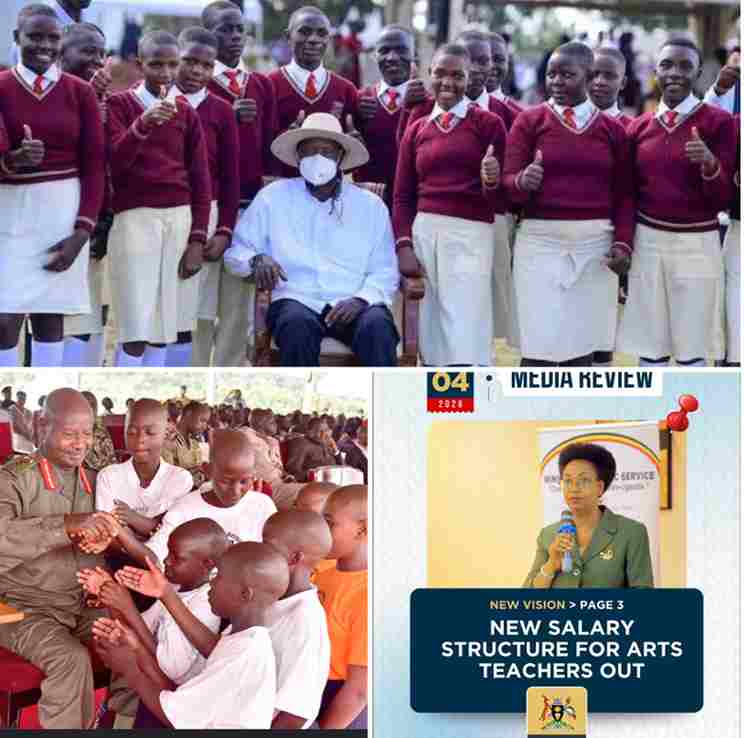
A fresh salary structure set to take effect on July 1, 2026, promises long-awaited pay rises for arts teachers, primary school educators, and school administrators across Uganda. Officials say the move is aimed at correcting longstanding wage imbalances within the education sector.
The development means that arts teachers in secondary schools, along with primary school teachers, headteachers, and their deputies, are just weeks away from receiving increments they have pushed for over several years—sometimes through strikes and collective action. The change marks a turning point after prolonged complaints that stagnant salaries had weakened morale and affected performance in schools.
Government approval of the new structure brings relief to thousands of arts teachers who have gone for years without any salary adjustment. The revision forms part of wider public service reforms intended to improve working conditions and retain skilled personnel in essential sectors.
Under the new framework, a government primary school headteacher will now earn Shs1.5 million monthly, up from Shs980,000. Deputy headteachers will see their pay rise from roughly Shs775,000 to Shs1.3 million. These changes represent one of the most notable increases for primary school leadership in recent years.
Classroom teachers are also set to benefit. Entry-level education assistants will earn Shs700,000, up from Shs449,000, while senior education assistants will see their salaries increase to about Shs727,000 from Shs602,000. The increments are expected to ease financial strain for teachers who have consistently cited low pay as a major challenge.
In total, 156,407 teachers are expected to benefit from the revised structure. This includes educators handling humanities subjects at both primary and secondary levels, as well as tutors in technical institutions. Authorities say the adjustments are designed to promote fairness within the profession while improving retention of experienced staff.
At the primary level, 132,278 individuals will benefit, including 8,226 headteachers, 6,978 deputy headteachers, 11,293 senior education assistants, and 105,781 education assistants. Officials note that classroom teachers make up the majority, reflecting the composition of the education workforce.
Meanwhile, 24,129 post-primary educators—including 1,097 headteachers and principals, 1,057 deputies, and 21,975 teachers and tutors—will also receive salary increases.
Secondary school adjustments
Secondary school leaders with arts qualifications will see notable improvements. Headteachers and principals will earn up to Shs3.5 million per month, up from about Shs2.3 million. Deputies will receive up to Shs2.1 million, while other teaching staff will also benefit from adjusted scales.
However, despite the increases, arts teachers will continue to earn less than their science counterparts, whose salaries were enhanced earlier. Analysts say this gap remains a sensitive issue that could influence future policy discussions.
Relief after years of stagnation
For many educators, the salary review comes after more than a decade without meaningful pay growth. During that time, financial pressures forced some teachers to take loans, seek alternative income sources, or leave the profession altogether.
The new pay structure is therefore being viewed not only as overdue relief but also as a strategic effort to stabilize the teaching workforce—particularly in rural and underserved areas where shortages have been most severe.
Salary highlights
Secondary schools
- Headteachers/Principals: Shs2.2m–2.3m → Shs3.5m
- Deputies: Shs1.6m–1.7m → Shs2.1m
- Education Officers: Up to Shs1.2m
- Assistant Education Officers: Shs700,000 → Shs1.3m
Primary schools
- Headteachers: Shs777,000–980,000 → Shs1.5m
- Deputies: Shs662,000–773,000 → Shs1.3m
- Senior Education Assistants: ~Shs602,000 → Shs727,000
- Education Assistants: Shs449,000–605,000 → Shs700,000
The pay review is not limited to teachers. Resident District Commissioners (RDCs), along with their deputies and assistants, are also expected to benefit from the adjustments, indicating a broader reform across public service roles.
As implementation begins, education stakeholders will be watching closely to see whether the new salaries improve teacher welfare, boost motivation, and ultimately enhance the quality of education nationwide.